Bourbon Street Sign : A Cultural, Historical, and Visual Exploration Through an Illustrated Street Sign
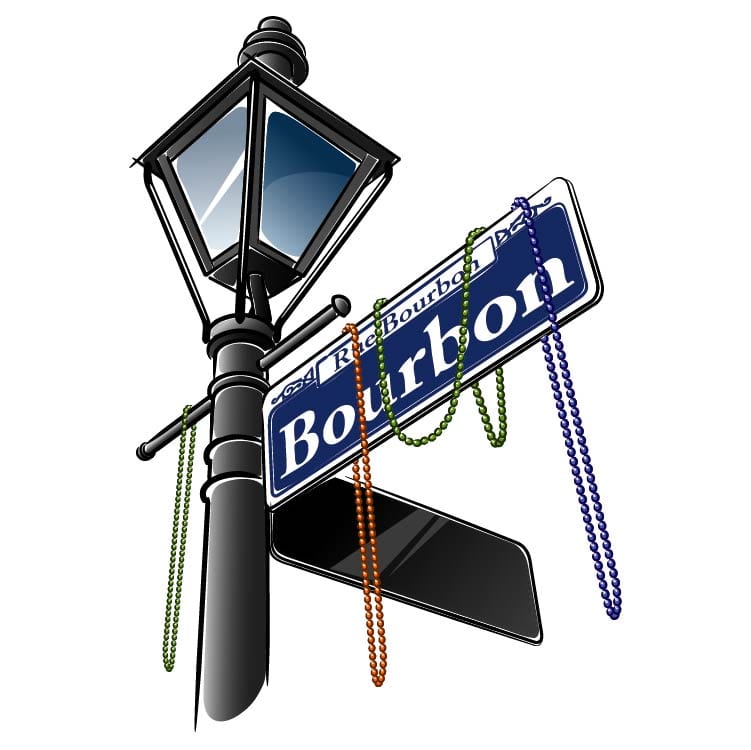
The illustration of a street sign for Bourbon Street represents far more than a simple marker of location. It acts as a visual gateway into one of the most iconic streets in the world, deeply embedded in the cultural, historical, musical, and celebratory identity of New Orleans, Louisiana. Bourbon Street is not merely a road within the French Quarter; it is a global symbol of festivity, resilience, heritage, and artistic expression. Through this illustrated sign—featuring bilingual text, Mardi Gras beads, and traditional design elements—we are invited to explore centuries of history and the vibrant spirit that defines this legendary street.
1 millions Man and woman sitting and drinking coffee in a street cafe Design Review 2024
Shutterstock Profile (Cambridge Design Vector)
Origins and Historical Significance (Bourbon Street Sign)
Bourbon Street traces its origins back to 1718, when New Orleans was founded by French colonists under Jean-Baptiste Le Moyne de Bienville. The street was named after the House of Bourbon, the ruling royal family of France at the time, as a tribute to French sovereignty and aristocratic heritage. This naming convention reflected the colonial structure of the city, with streets often honoring French nobility, saints, or royal institutions.
The inclusion of both English (“Bourbon”) and French (“Rue Bourbon”) on the sign reinforces the city’s bilingual and bicultural legacy. New Orleans has long existed at the crossroads of French, Spanish, African, Caribbean, and American influences. Even today, the French Quarter—also known as Vieux Carré—retains its European street layouts, wrought-iron balconies, and architectural elegance that distinguishes it from other American cities.
Bourbon Street and the French Quarter (Bourbon Street Sign)
Situated in the heart of the French Quarter, Bourbon Street runs approximately 13 blocks, from Canal Street to Esplanade Avenue. While the entire street holds historical importance, the stretch most commonly associated with nightlife and celebration lies between Canal Street and St. Ann Street. This section has evolved into an epicenter of entertainment, drawing millions of visitors each year.
The illustrated sign symbolizes this geographic and cultural anchor point. Street signs in historic districts often carry decorative flair, and Bourbon Street’s signage is no exception. It is not merely functional but ornamental, reinforcing the street’s role as a living museum of culture, celebration, and history.
Evolution into a Nightlife Capital (Bourbon Street Sign)
While Bourbon Street began as a residential and commercial avenue during the 18th and 19th centuries, its transformation into a nightlife hub occurred gradually. By the early 20th century, the street had become associated with jazz clubs, bars, and entertainment venues. The repeal of Prohibition in 1933 accelerated this transformation, allowing nightlife culture to flourish openly.
Jazz, blues, rock, brass bands, and later modern genres found a natural home on Bourbon Street. Music spills out from open doorways, balconies, and street corners, creating a soundscape unlike anywhere else in the world. The illustrated sign thus becomes a symbol not only of location but of sound, rhythm, and movement.
Mardi Gras: The Soul of Bourbon Street (Bourbon Street Sign)
One of the most powerful elements of the illustration is the inclusion of Mardi Gras beads. These colorful strands are among the most recognizable symbols of New Orleans culture. During Mardi Gras celebrations, beads are thrown from parade floats and balconies to revelers below—a tradition that dates back to the late 19th century.
Bourbon Street serves as a focal point during Mardi Gras, transforming into a river of color, music, costumes, and celebration. The beads on the sign visually communicate festivity, generosity, and communal joy. They also represent participation—Mardi Gras is not a spectator event but an immersive experience.
Each color of the beads traditionally holds meaning:
-
Purple represents justice
-
Green symbolizes faith
-
Gold signifies power
By incorporating these beads, the illustrated sign connects Bourbon Street directly to the values and traditions that define Mardi Gras and, by extension, New Orleans itself.
Symbolism of the Street Sign Design (Bourbon Street Sign)
From a design perspective, the illustrated sign is rich in symbolism. Street signs typically denote boundaries and directions, but this one transcends its utilitarian purpose. It acts as a cultural emblem, communicating history, celebration, and identity at a glance.
The bilingual text emphasizes inclusivity and historical continuity. The decorative beads add movement and energy, suggesting that this is not a static place but one constantly alive with activity. The overall aesthetic evokes nostalgia while remaining vibrant, much like Bourbon Street itself—a place where the past and present coexist seamlessly.
Architecture and Visual Identity (Bourbon Street Sign)
Bourbon Street’s visual character is inseparable from its architecture. Spanish-style buildings with inner courtyards, French-inspired iron balconies, pastel facades, and gas lanterns define the streetscape. Many of these balconies play an active role during festivals, serving as stages from which beads are thrown and music is played.
The illustrated sign can be imagined hanging against this architectural backdrop, framed by wrought iron and historic masonry. It visually belongs to its environment, echoing the ornamental nature of the surrounding structures.
Cultural Diversity and Influence (Bourbon Street Sign)
New Orleans is one of the most culturally diverse cities in the United States, and Bourbon Street reflects this diversity vividly. African rhythms, Caribbean traditions, French culinary influences, and Southern American customs blend together here. This fusion is evident in everything from music and food to language and art.
The bilingual nature of the sign acknowledges this multicultural heritage. “Rue Bourbon” is not merely a translation—it is a reminder that the street existed long before it became an American icon. It honors the layers of history that continue to shape the city’s identity.
Food, Drink, and Culinary Culture (Bourbon Street Sign)
Bourbon Street is also synonymous with distinctive culinary and beverage traditions. Iconic drinks such as the Hurricane, Hand Grenade, and Sazerac are closely associated with the street. Restaurants and bars serve Creole and Cajun cuisine, blending French techniques with local ingredients and African influences.
The illustrated sign, adorned with Mardi Gras beads, indirectly represents this indulgent culture—where food and drink are integral to celebration. Bourbon Street encourages sensory engagement, and the sign acts as an invitation to partake in these experiences.
Bourbon Street in Popular Culture
Over the decades, Bourbon Street has appeared in countless films, songs, novels, and artworks. It is often portrayed as a place of freedom, excess, mystery, and creativity. The illustrated sign taps into this global recognition, instantly evoking images of neon lights, jazz music, dancing crowds, and historic charm.
Artists and designers frequently use Bourbon Street imagery to communicate themes of celebration, heritage, and individuality. The sign itself becomes a design motif, easily recognizable and emotionally resonant.
Tourism and Global Recognition
Bourbon Street is one of the most visited streets in the United States, attracting tourists from around the world. For many visitors, seeing the Bourbon Street sign is a symbolic moment—proof that they have arrived at the heart of New Orleans.
The illustration captures this sense of arrival. It functions almost like a landmark logo, representing the city in visual form. Just as the Eiffel Tower symbolizes Paris or Times Square symbolizes New York, Bourbon Street symbolizes New Orleans.
Resilience and Continuity
Despite facing numerous challenges—natural disasters, economic changes, and social transformation—Bourbon Street has remained resilient. After events such as Hurricane Katrina, the street became a symbol of the city’s determination to rebuild and preserve its cultural heart.
The illustrated sign, in this context, also represents endurance. It stands as a marker of continuity, reminding viewers that while the city evolves, its spirit remains intact.
Artistic Interpretation and Illustration Style
As an illustration, the sign allows for creative interpretation. Colors can be intensified, beads exaggerated, and typography stylized to enhance emotional impact. This artistic freedom mirrors the expressive culture of New Orleans itself, where art is not confined to galleries but lives in the streets.
Illustrated street signs are often used in educational materials, travel guides, posters, and branding projects. This particular illustration serves both an informative and decorative purpose, making it versatile for multiple design applications.
Educational and Cultural Value
Beyond aesthetics, the illustrated Bourbon Street sign has educational significance. It introduces viewers to:
-
The French origins of New Orleans
-
The historical naming of streets
-
The cultural importance of Mardi Gras
-
The bilingual nature of the city
In classrooms, museums, or cultural exhibitions, such an illustration can act as a visual entry point into deeper discussions about history, colonization, cultural fusion, and urban identity.
Conclusion
The illustration of the Bourbon Street sign is a powerful visual narrative condensed into a single object. It represents history, celebration, music, resilience, and cultural fusion. Through bilingual text, festive Mardi Gras beads, and symbolic design elements, it captures the essence of one of the world’s most iconic streets.
Bourbon Street is not just a destination—it is an experience shaped by centuries of tradition and constant reinvention. The illustrated sign stands as a tribute to this legacy, inviting viewers to explore, celebrate, and understand the vibrant soul of New Orleans. In doing so, it transforms a simple street sign into a timeless cultural symbol.





There are no reviews yet.