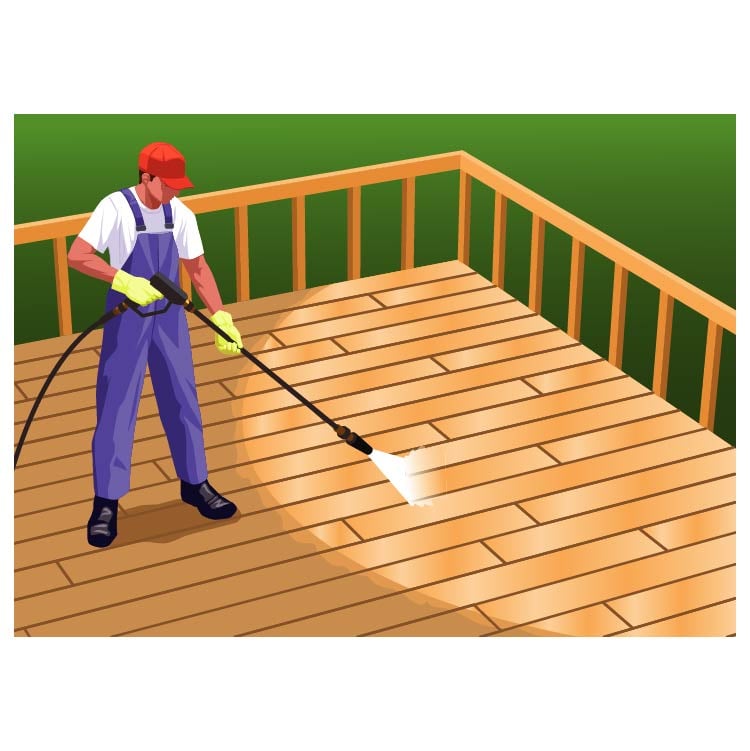
Cleaning terrace with a power washer: A Complete Analysis of Benefits, Risks, Techniques, Safety, and Related Considerations
Pressure washing a wooden deck is one of the most commonly practiced outdoor maintenance activities in residential and commercial properties. The image depicts a person using a pressure washer to clean a wooden deck, a process intended to remove accumulated dirt, grime, mold, algae, and old surface finishes. While pressure washing can dramatically improve the appearance and usability of a deck, it also carries certain risks if not performed correctly. Understanding both the positive (good) and negative (bad) aspects of this activity is essential to achieving effective results while preventing damage, safety hazards, or environmental harm.
This detailed explanation explores everything related to pressure washing a wooden deck, including its purpose, advantages, disadvantages, techniques, safety measures, environmental impact, preparation, aftercare, and long-term implications.
1 millions Washing machine and microwave with red gift ribbon Design Review
Shutterstock Profile (Cambridge Design Vector)
Understanding Pressure Washing (Cleaning terrace with a power washer)
Pressure washing is a cleaning method that uses high-pressure water spray generated by a mechanical pump. The force of the water is strong enough to dislodge dirt, stains, mold, and old coatings from surfaces. When used on wood, especially decking material, pressure washing must be handled carefully because wood is a natural and relatively soft material compared to concrete or stone.
WHAT is Pressure Washing a Wooden Deck?
Pressure washing is a cleaning method that uses high-pressure water spray to remove unwanted substances from surfaces. When applied to a wooden deck, it is used to eliminate:
-
Dirt and dust buildup
-
Mold and mildew
-
Algae and moss
-
Old stains, paints, or sealants
-
Bird droppings and organic debris
A pressure washer consists of:
-
A motor or engine
-
A water pump
-
A hose
-
Interchangeable spray nozzles
The force of the water dislodges contaminants embedded in the wood grain, restoring the deck’s natural appearance.
WHY is Pressure Washing a Wooden Deck Necessary?
Pressure washing a wooden deck is necessary for several important reasons:
1. Hygiene and Cleanliness
Outdoor decks are constantly exposed to:
-
Rain
-
Dust
-
Leaves
-
Foot traffic
These conditions encourage the growth of mold and bacteria, which can make the surface slippery and unhealthy.
2. Aesthetic Improvement
Over time, wooden decks lose their natural color and become dull or stained. Pressure washing rejuvenates the surface, making it look fresh and well-maintained.
3. Safety Reasons
Mold and algae can cause slippery surfaces, increasing the risk of falls and injuries. Regular cleaning reduces this hazard.
4. Surface Preparation
Before applying:
-
Stains
-
Sealants
-
Paints
The deck must be clean and free from old coatings. Pressure washing ensures proper adhesion of new finishes.
5. Extending Deck Life
Removing damaging elements like mold and grime prevents premature wood decay, extending the deck’s lifespan.
WHO Should Perform Pressure Washing?
1. Homeowners
Homeowners with basic knowledge and proper equipment can pressure wash their decks themselves.
2. Professional Cleaners
Professionals are recommended when:
-
The deck is large
-
The wood is old or delicate
-
Severe mold or damage is present
Professionals understand correct pressure levels and techniques.
3. Maintenance Staff
In commercial properties such as hotels, resorts, or apartment complexes, trained maintenance personnel handle deck cleaning.
WHEN Should a Wooden Deck Be Pressure Washed?
1. Seasonal Timing
The best time is:
-
Spring: To remove winter debris and prepare for outdoor use
-
Early Summer: Before sealing or staining
-
Autumn: To remove organic buildup before winter
Avoid pressure washing during freezing temperatures.
2. Before Refinishing
Pressure washing should always be done before applying stains, paints, or sealants.
3. When Visible Dirt Appears
If the deck shows:
-
Dark patches
-
Green mold
-
Slippery surfaces
It is time for cleaning.
WHERE is Pressure Washing Used?
Pressure washing is not limited to wooden decks. It is used on:
-
Outdoor decks and patios
-
Driveways
-
Sidewalks
-
House siding
-
Fences
-
Outdoor furniture
In the context of the image, the activity takes place outdoors, typically in residential backyards, terraces, or garden areas.
Why Wooden Decks Need Cleaning (Cleaning terrace with a power washer)
Wooden decks are continuously exposed to outdoor elements such as:
-
Rain and moisture
-
Sunlight and UV radiation
-
Dust and pollution
-
Leaves and organic debris
-
Foot traffic
-
Food spills and grease (especially in entertainment areas)
Over time, these factors lead to discoloration, mold growth, algae formation, and surface deterioration. Pressure washing is often chosen because it provides a deep and efficient cleaning solution.
GOOD THINGS (ADVANTAGES) OF PRESSURE WASHING A WOODEN DECK (Cleaning terrace with a power washer)
1. Deep and Effective Cleaning (Cleaning terrace with a power washer)
One of the biggest advantages of pressure washing is its ability to remove deeply embedded dirt and contaminants that ordinary sweeping or scrubbing cannot eliminate. Mold, mildew, algae, and grime penetrate the wood grain, and pressure washing can flush them out effectively.
2. Improves Visual Appearance (Cleaning terrace with a power washer)
Pressure washing can dramatically restore the natural look of wood by:
-
Removing dark stains
-
Eliminating green algae patches
-
Brightening faded boards
A clean deck looks newer, more inviting, and well-maintained, enhancing the overall appearance of the property.
3. Enhances Safety (Cleaning terrace with a power washer)
Mold, mildew, and algae make wooden decks slippery, especially when wet. Pressure washing removes these hazards, significantly reducing the risk of slips and falls, particularly for children, elderly individuals, and pets.
4. Prepares the Surface for Finishing (Cleaning terrace with a power washer)
Before applying:
-
Wood stains
-
Sealants
-
Paints
The surface must be clean and free of old coatings. Pressure washing ensures proper surface preparation, allowing finishes to adhere better and last longer.
5. Extends the Life of the Deck (Cleaning terrace with a power washer)
Organic growth such as mold and algae accelerates wood decay. Regular pressure washing removes these destructive elements, slowing down rot and extending the lifespan of the deck.
6. Saves Time and Labor (Cleaning terrace with a power washer)
Compared to manual scrubbing with brushes and chemicals, pressure washing cleans large areas quickly and efficiently, making it a time-saving option.
7. Cost-Effective Maintenance (Cleaning terrace with a power washer)
Regular pressure washing reduces the need for:
-
Costly repairs
-
Board replacement
-
Full deck resurfacing
Preventive maintenance is always more economical than major restoration.
8. Increases Property Value (Cleaning terrace with a power washer)
A clean, well-maintained deck improves curb appeal and can positively influence property value, especially when selling or renting a home.
9. Eliminates Harmful Microorganisms (Cleaning terrace with a power washer)
Pressure washing removes bacteria, mold spores, pollen, and allergens, creating a healthier outdoor environment.
BAD THINGS (DISADVANTAGES) OF PRESSURE WASHING A WOODEN DECK (Cleaning terrace with a power washer)
Despite its benefits, pressure washing also has several potential drawbacks.
1. Risk of Wood Damage (Cleaning terrace with a power washer)
Improper pressure washing can:
-
Etch the wood surface
-
Raise wood fibers
-
Cause splintering
-
Leave visible marks or grooves
Using excessive pressure or the wrong spray nozzle can permanently damage the wood.
2. Moisture Penetration Issues (Cleaning terrace with a power washer)
High-pressure water can force moisture deep into the wood, leading to:
-
Swelling
-
Warping
-
Cracking
-
Accelerated rot
If the deck does not dry properly, moisture-related problems may worsen.
3. Shortened Deck Life if Done Incorrectly (Cleaning terrace with a power washer)
Repeated improper pressure washing can weaken wood fibers over time, reducing the structural integrity of the deck.
4. Safety Hazards (Cleaning terrace with a power washer)
Pressure washers can be dangerous if mishandled. Risks include:
-
Cuts and injuries from high-pressure spray
-
Flying debris hitting eyes or skin
-
Slips due to wet surfaces
This is why personal protective equipment (PPE) such as gloves and safety glasses is essential.
5. Environmental Impact (Cleaning terrace with a power washer)
Pressure washing can negatively affect the environment if:
-
Excessive water is wasted
-
Chemical cleaners run off into soil or drains
-
Nearby plants are damaged
6. Not Suitable for All Decks (Cleaning terrace with a power washer)
Old, weathered, or softwood decks may be too fragile for pressure washing. In such cases, gentle cleaning methods are safer.
7. Requires Skill and Experience (Cleaning terrace with a power washer)
Pressure washing wood is not as simple as washing concrete. Incorrect angle, pressure, or distance can cause irreversible damage.
PROPER TECHNIQUE AND BEST PRACTICES
Choosing the Right Pressure
-
Recommended pressure for wood: 500–1200 PSI
-
Avoid high-pressure settings designed for concrete
Selecting the Correct Nozzle
-
40-degree spray tip: safest for wood
-
25-degree tip: moderate cleaning
-
0-degree tip: never use on wood
Maintaining Safe Distance
The nozzle should be held 12–18 inches away from the surface to prevent damage.
Spraying Direction
Always spray along the grain of the wood, not across it, to minimize surface damage.
Continuous Movement
Never hold the spray in one place. Constant motion prevents gouging and uneven cleaning.
SAFETY CONSIDERATIONS
Personal Protective Equipment (PPE)
As implied in the image:
-
Safety glasses protect eyes from debris
-
Gloves protect hands
-
Closed shoes prevent foot injuries
-
Long clothing protects skin
Area Safety
-
Keep children and pets away
-
Remove obstacles
-
Ensure stable footing
PREPARATION BEFORE PRESSURE WASHING
-
Remove furniture and planters
-
Sweep loose debris
-
Cover nearby plants
-
Inspect deck for loose boards or nails
AFTER WASHING CARE
Drying Time
The deck should be allowed to dry completely for 24–48 hours, depending on weather conditions.
Post-Cleaning Inspection
Check for:
-
Raised wood fibers
-
Splinters
-
Loose fasteners
Light sanding may be required before sealing.
Applying Protective Coatings
After drying:
-
Apply stain or sealant
-
This protects wood from moisture, UV rays, and future damage
ENVIRONMENTAL CONSIDERATIONS
Water Conservation
Use pressure washers efficiently to minimize water waste.
Eco-Friendly Cleaners
Choose biodegradable, non-toxic cleaners to reduce environmental harm.
Plant Protection
Rinse plants with clean water before and after washing to prevent chemical damage.
DIY vs PROFESSIONAL PRESSURE WASHING
DIY Advantages
-
Lower cost
-
Flexible timing
DIY Disadvantages
-
Higher risk of damage
-
Requires learning and practice
Professional Advantages
-
Expertise and experience
-
Proper equipment
-
Lower risk of mistakes
Professional Disadvantages
-
Higher cost
LONG-TERM IMPACT OF PRESSURE WASHING
When done correctly and occasionally:
-
Improves deck longevity
-
Maintains appearance
-
Prevents structural decay
When done improperly or too frequently:
-
Weakens wood
-
Causes surface damage
-
Increases maintenance needs
ALTERNATIVES TO PRESSURE WASHING
-
Soft washing
-
Hand scrubbing
-
Low-pressure rinsing
-
Chemical cleaning (with care)
These methods may be better for delicate or aging decks.
CONCLUSION
Pressure washing a wooden deck is a highly effective maintenance method when performed correctly and responsibly. It offers numerous benefits, including deep cleaning, improved safety, enhanced appearance, and extended deck life. However, it also presents significant risks if improper techniques, excessive pressure, or inadequate safety measures are used.
Understanding both the good and bad aspects—from technical execution and safety to environmental impact and aftercare—is essential for successful deck maintenance. The image represents a responsible approach, showing proper equipment use, protective gear, and attention to post-washing care.
Ultimately, pressure washing is a powerful tool. When used with knowledge, care, and moderation, it becomes an invaluable method for preserving wooden decks. When misused, it can cause costly damage. Balance, technique, and awareness are the keys to achieving the best results.





There are no reviews yet.