The Emoji Wearing an Uncle Sam Hat: Ancient Roots, Historical Meaning, Cultural Symbolism, Global Usage, Benefits, and Criticisms
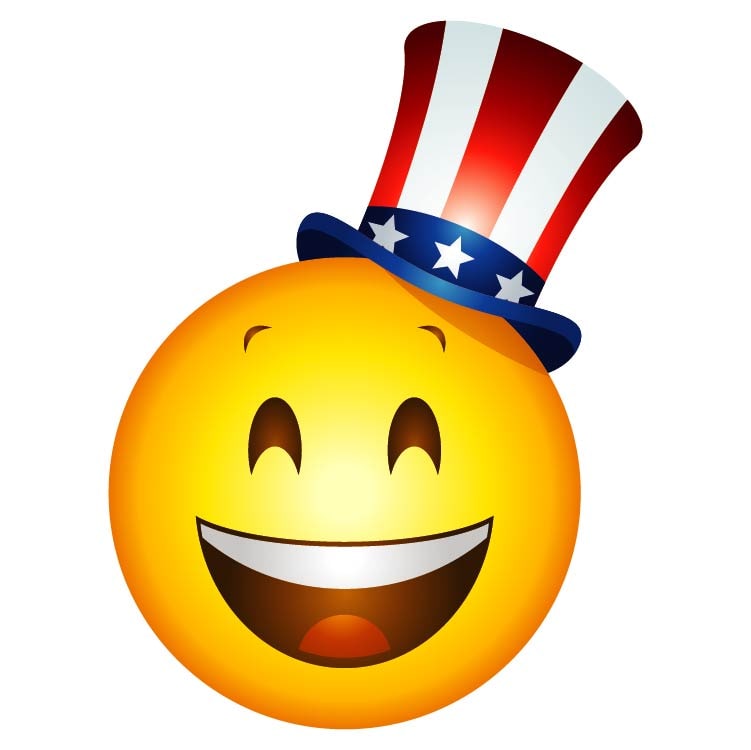
Introduction (Happy patriotic yellow cartoon emoji face character wearing united states of america flag uncle sam hat)
An emoji wearing an Uncle Sam hat combines two powerful forms of symbolism:
-
The modern emoji, a universal digital language of emotion and expression
-
The Uncle Sam hat, one of the strongest visual symbols of American identity and patriotism
The image typically features a smiling emoji face, wearing a tall top hat decorated with red and white stripes and a blue band with white stars, mirroring the design of the United States flag. This image is widely used during American national holidays, especially Independence Day (July 4th), Memorial Day, Veterans Day, and Presidents’ Day.
While the emoji appears playful and contemporary, the symbolism behind it is deeply rooted in ancient traditions of national identity, personification of states, symbolic headgear, and visual communication that date back thousands of years.
1 millions Uncle sam hat symbol of USA or united states of america Design Review
Shutterstock Profile (Cambridge Design Vector)
What Does the Emoji Wearing an Uncle Sam Hat Represent? (Happy patriotic yellow cartoon emoji face character wearing united states of america flag uncle sam hat)
At its core, this emoji represents:
-
American patriotism 🇺🇸
-
National pride
-
Celebration of independence
-
Unity and shared identity
-
Freedom and democracy
-
Festive national spirit
The smiling face adds positivity and friendliness, while the Uncle Sam hat clearly anchors the image in American culture.
Why Is the Uncle Sam Hat Used? (Happy patriotic yellow cartoon emoji face character wearing united states of america flag uncle sam hat)
The hat is instantly recognizable and serves as:
-
A shorthand for the United States
-
A visual symbol of national authority and pride
-
A festive patriotic accessory
Hats, historically, have always symbolized status, role, identity, and power, making them ideal for national symbolism.
Ancient Origins of Symbolic Headgear (Happy patriotic yellow cartoon emoji face character wearing united states of america flag uncle sam hat)
1 Headgear in Ancient Civilizations
Long before Uncle Sam:
-
Egyptian pharaohs wore crowns representing divine rule
-
Roman leaders wore laurel wreaths as symbols of victory
-
Greek gods were identified by unique headpieces
-
Chinese emperors wore ceremonial hats to represent heaven and earth
Headgear has always been a visual marker of authority, belonging, and ideology.
Personification of Nations in Ancient Times (Happy patriotic yellow cartoon emoji face character wearing united states of america flag uncle sam hat)
Ancient civilizations often represented states as human figures:
-
Rome was personified as Roma
-
Greece as Hellas
-
India as Bharat Mata
-
Britain later developed Britannia
This tradition laid the groundwork for Uncle Sam as the personification of the United States.
Origins of Uncle Sam (Happy patriotic yellow cartoon emoji face character wearing united states of america flag uncle sam hat)
1 Historical Background
Uncle Sam emerged in the early 19th century:
-
During the War of 1812
-
Linked to Samuel Wilson, a meat supplier for the U.S. Army
-
“U.S.” on barrels was jokingly interpreted as “Uncle Sam”
Over time, Uncle Sam evolved into the symbolic embodiment of the American government and people.
Evolution of the Uncle Sam Hat (Happy patriotic yellow cartoon emoji face character wearing united states of america flag uncle sam hat)
The iconic Uncle Sam hat developed gradually:
-
Tall top hat (inspired by 19th-century fashion)
-
Red and white stripes (flag symbolism)
-
Blue band with white stars (union of states)
It visually communicates:
-
Authority
-
Patriotism
-
National unity
Transition from Poster to Emoji (Happy patriotic yellow cartoon emoji face character wearing united states of america flag uncle sam hat)
The most famous Uncle Sam image is the 1917 recruitment poster with the phrase “I Want YOU for U.S. Army.”
The emoji version modernizes this symbol:
-
Removes aggression
-
Adds friendliness
-
Makes it inclusive and celebratory
The Role of Emojis in Modern Communication (Happy patriotic yellow cartoon emoji face character wearing united states of america flag uncle sam hat)
Emojis are:
-
A global visual language
-
Used across cultures and ages
-
Faster than text
-
Emotionally expressive
The Uncle Sam emoji blends national symbolism with digital expression.
Why Combine Emoji with Patriotism? (Happy patriotic yellow cartoon emoji face character wearing united states of america flag uncle sam hat)
-
Makes nationalism softer and more accessible
-
Appeals to younger audiences
-
Fits social media culture
-
Encourages celebration without seriousness
Ancient Roots of National Symbols (Happy patriotic yellow cartoon emoji face character wearing united states of america flag uncle sam hat)
Even in ancient times:
-
Flags symbolized tribes and kingdoms
-
Totems represented collective identity
-
Colors and patterns conveyed allegiance
The American flag follows this ancient tradition of visual identity.
Meaning of the Colors on the Hat (Happy patriotic yellow cartoon emoji face character wearing united states of america flag uncle sam hat)
1 Red
-
Courage
-
Sacrifice
-
Valor
2 White
-
Purity
-
Innocence
-
Ideals
3 Blue
-
Vigilance
-
Justice
-
Perseverance
These meanings mirror ancient color symbolism used in empires worldwide.
Countries Where This Emoji or Symbol Is Mostly Used (Happy patriotic yellow cartoon emoji face character wearing united states of america flag uncle sam hat)
1 United States 🇺🇸
Primary usage:
-
Independence Day
-
Political messaging
-
Sports events
-
Social media celebrations
Canada (Happy patriotic yellow cartoon emoji face character wearing united states of america flag uncle sam hat)
Used occasionally:
-
To reference American events
-
In cross-border cultural discussions
United Kingdom (Happy patriotic yellow cartoon emoji face character wearing united states of america flag uncle sam hat)
-
Used humorously or politically
-
Often in commentary about U.S. policies
Europe (Happy patriotic yellow cartoon emoji face character wearing united states of america flag uncle sam hat)
-
Used in media discussions about America
-
Cultural or political memes
Asia (India, Japan, South Korea) (Happy patriotic yellow cartoon emoji face character wearing united states of america flag uncle sam hat)
-
Used in global conversations
-
Popular in pop culture and emojis
-
Seen as a symbol of “America” rather than nationalism
Latin America (Happy patriotic yellow cartoon emoji face character wearing united states of america flag uncle sam hat)
-
Used during U.S. events
-
In entertainment and sports discussions
Why It Is Less Used Outside the U.S. (Happy patriotic yellow cartoon emoji face character wearing united states of america flag uncle sam hat)
-
Strong national specificity
-
Cultural relevance tied to American history
-
Not universally patriotic
Role in American Holidays (Happy patriotic yellow cartoon emoji face character wearing united states of america flag uncle sam hat)
20.1 Independence Day (July 4)
-
Fireworks 🎆
-
Flags 🇺🇸
-
Patriotic emojis
The Uncle Sam emoji adds fun and festivity.
Memorial Day and Veterans Day (Happy patriotic yellow cartoon emoji face character wearing united states of america flag uncle sam hat)
-
Symbol of respect
-
Used carefully to avoid disrespect
Political Usage (Happy patriotic yellow cartoon emoji face character wearing united states of america flag uncle sam hat)
-
Election campaigns
-
Civic participation reminders
-
Voter engagement messages
Good Things (Positive Aspects) (Happy patriotic yellow cartoon emoji face character wearing united states of america flag uncle sam hat)
1 Encourages National Pride
-
Builds unity
-
Reinforces shared identity
Friendly Patriotism (Happy patriotic yellow cartoon emoji face character wearing united states of america flag uncle sam hat)
-
Non-aggressive
-
Inclusive
-
Celebratory rather than confrontational
Digital Accessibility (Happy patriotic yellow cartoon emoji face character wearing united states of america flag uncle sam hat)
-
Easy to share
-
Universally recognized
-
Works across platforms
Cultural Education (Happy patriotic yellow cartoon emoji face character wearing united states of america flag uncle sam hat)
-
Introduces global audiences to American symbols
-
Encourages curiosity about history
Youth Engagement (Happy patriotic yellow cartoon emoji face character wearing united states of america flag uncle sam hat)
-
Appeals to younger generations
-
Keeps traditions alive digitally
Emotional Positivity (Happy patriotic yellow cartoon emoji face character wearing united states of america flag uncle sam hat)
-
Smiling emoji reduces tension
-
Promotes joy and celebration
Global Communication Tool (Happy patriotic yellow cartoon emoji face character wearing united states of america flag uncle sam hat)
-
Quickly indicates “American context”
-
Useful in international dialogue
Creative Expression
-
Used in memes
-
Artistic reinterpretations
-
Graphic design
Bad Things (Negative Aspects)
1 Oversimplification of Patriotism
-
Reduces complex national identity to a cartoon
-
Can feel shallow
Political Misuse
-
Used for propaganda
-
Can polarize opinions
Cultural Misinterpretation
-
Some see it as nationalism or arrogance
-
Context matters
Exclusion Concerns
-
May not represent all American identities
-
Over-focus on one symbol
Commercialization
-
Overused in marketing
-
Can lose sincerity
Stereotyping America
-
Reduces a diverse nation to one image
-
Reinforces clichés
Inappropriate Contexts
-
Not suitable for serious tragedies
-
Can appear insensitive
Ancient vs Modern National Identity
Ancient identity:
-
Tribe-based
-
Sacred symbolism
Modern identity:
-
Media-driven
-
Digitally expressed
The emoji bridges this gap.
Symbolism of the Smile
-
Softens authority
-
Represents optimism
-
Encourages unity
Psychology of Emoji Patriotism
-
Visual symbols trigger emotional connection
-
Smiles increase engagement
-
Colors evoke belonging
The Uncle Sam Hat as a Global Icon
Even non-Americans recognize:
-
The hat
-
The color scheme
-
Its association with the U.S.
Comparison with Other National Emojis
-
🇬🇧 British symbols: Crown, Union Jack
-
🇯🇵 Japan: Rising sun
-
🇫🇷 France: Marianne
All stem from ancient personification traditions.
Ethical Use of National Symbols
-
Respect cultural sensitivity
-
Avoid hate or mockery
-
Promote unity
The Emoji in Education
-
Used in digital learning
-
Teaching national holidays
-
Making history engaging
Use in Pop Culture
-
Social media posts
-
Influencer content
-
Entertainment promotions
The Bell Curve of Symbol Evolution
From:
Ancient crowns → Medieval banners → Modern flags → Digital emojis
Technology and National Identity
Digital tools reshape:
-
How patriotism is expressed
-
How identity is shared
The Emoji as Soft Power
-
Represents American culture globally
-
Influences perceptions
Balance Between Fun and Respect
Symbols must:
-
Be joyful
-
Maintain dignity
Cultural Longevity
The Uncle Sam emoji survives because:
-
Simple design
-
Strong historical roots
-
Emotional appeal
Future of Patriotic Emojis
-
More inclusive designs
-
Broader representation
-
Interactive symbols
Ancient Lessons in Symbolism
Ancient civilizations understood:
-
Images speak louder than words
-
Symbols unite people
The Emoji as Modern Totem
A digital totem:
-
Represents belonging
-
Shared values
-
Collective identity
Responsible Digital Patriotism
-
Celebrate without excluding
-
Share without provoking
Globalization and National Symbols
-
Emojis travel across borders
-
Meanings evolve
Visual Power of the Hat
Tall hat:
-
Visibility
-
Authority
-
Recognition
Emotional Resonance of National Colors
-
Triggers memory
-
Reinforces loyalty
Cultural Adaptability
-
Used humorously or respectfully
-
Depends on context
Why This Emoji Endures
Because it is:
-
Simple
-
Cheerful
-
Symbolic
-
Recognizable
Conclusion
The emoji wearing an Uncle Sam hat is far more than a playful digital image. It is the modern evolution of ancient traditions of national symbolism, combining historic personification, symbolic headgear, and visual communication with the language of the digital age. Rooted in centuries-old practices of representing nations through human figures and symbolic attire, this emoji reflects American pride, celebration, and identity in a friendly and accessible form.
While it brings positivity, unity, and cultural recognition, it must be used thoughtfully to avoid oversimplification or misuse. When balanced with respect and context, the Uncle Sam emoji stands as a powerful example of how ancient symbolism continues to live and evolve in modern digital culture.





There are no reviews yet.