WINDOW TYPES & WINDOW TREATMENTS – COMPLETE POINT-WISE DESCRIPTION
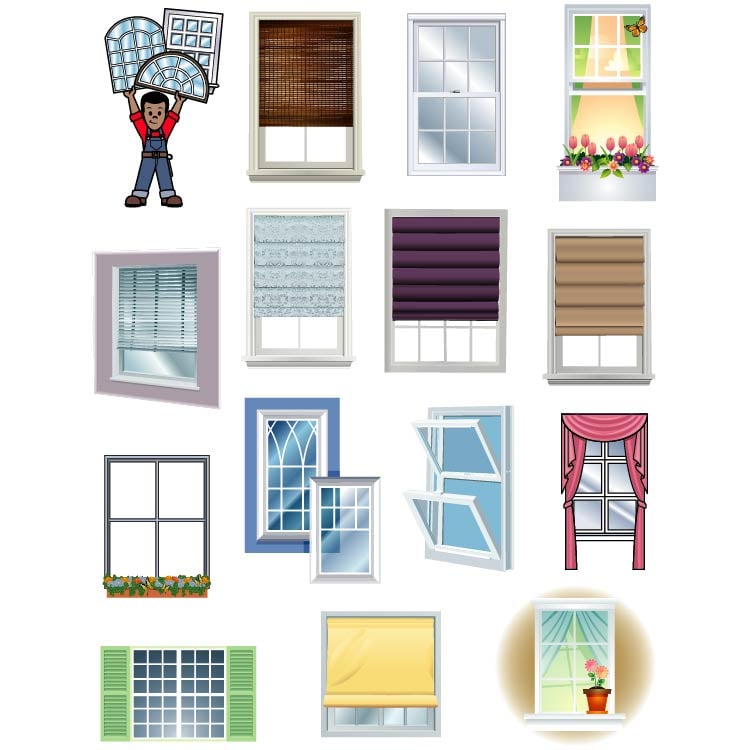
Introduction to Windows and Window Treatments (Set of window frame types collection)
-
A window is an opening in a wall, door, roof, or structure that allows light, air, and sometimes sound to pass through.
-
Window treatments are coverings or modifications used to enhance:
-
Privacy
-
Light control
-
Temperature regulation
-
Decoration
-
-
The image shows various window treatment options:
-
Blinds
-
Shades
-
Curtains and drapes
-
Shutters
-
-
These elements play an important role in architecture, comfort, energy efficiency, and aesthetics.
1 millions Pets in window house seeing outside pets Design Review
Shutterstock Profile (Cambridge Design Vector)
Ancient History of Windows
1 Early Civilizations (Set of window frame types collection)
-
In ancient times, homes did not have glass windows.
-
Early windows were open holes in walls for light and ventilation.
-
Civilizations like:
-
Mesopotamia
-
Egypt
-
Indus Valley
used small openings covered with cloth, wood, or stone grills.
-
2 Ancient Egypt (Set of window frame types collection)
-
Windows were placed high to reduce heat.
-
Covered with linen cloth or wooden screens.
-
Early form of privacy control.
3 Ancient Greece (Set of window frame types collection)
-
Used wooden shutters instead of glass.
-
Focused on airflow and shading from sun.
4 Ancient Rome (Set of window frame types collection)
-
Introduced early glass windows around 100 CE.
-
Wealthy Romans used translucent glass.
-
Curtains made from fabric or animal skins were common.
Evolution of Window Treatments (Set of window frame types collection)
-
As glass became affordable, window coverings evolved.
-
Medieval Europe introduced:
-
Heavy drapes for insulation
-
Wooden shutters for protection
-
-
Industrial Revolution allowed mass production of blinds and shades.
Window Blinds – Overview (Set of window frame types collection)
-
Window blinds consist of slats that can be tilted or raised.
-
They provide adjustable control over:
-
Light
-
Privacy
-
Airflow
-
Types of Window Blinds
1 Venetian Blinds (Set of window frame types collection)
-
Horizontal slats made of:
-
Wood
-
Aluminum
-
PVC
-
-
Slats tilt to control light direction.
-
Invented in the 18th century.
2 Mini Blinds (Set of window frame types collection)
-
Narrow slats (usually aluminum).
-
Affordable and lightweight.
-
Common in offices and apartments.
3 Vertical Blinds (Set of window frame types collection)
-
Vertical slats, ideal for large windows and sliding doors.
-
Often used in commercial spaces.
Advantages of Window Blinds (Good Things) (Set of window frame types collection)
-
Excellent light control
-
Easy to clean
-
Affordable options available
-
Suitable for modern interiors
-
Durable materials
Disadvantages of Window Blinds (Bad Things) (Set of window frame types collection)
-
Slats can bend or break
-
Dust accumulation
-
Less decorative than curtains
-
Can look industrial
Window Shades – Overview (Set of window frame types collection)
-
Shades are made from a single continuous piece of material.
-
They move up and down instead of tilting.
-
Offer a clean, minimalist appearance.
Types of Window Shades
1 Roller Shades (Set of window frame types collection)
-
Fabric rolls around a tube.
-
Simple and modern design.
-
Available in blackout or sheer fabrics.
2 Roman Shades (Set of window frame types collection)
-
Fabric folds into pleats when raised.
-
Decorative and elegant.
3 Cellular (Honeycomb) Shades (Set of window frame types collection)
-
Structured fabric cells trap air.
-
Excellent insulation.
-
Energy-efficient.
Advantages of Window Shades (Set of window frame types collection)
-
Sleek appearance
-
Good insulation
-
Softens interior look
-
Wide fabric choices
-
Effective light blocking
Disadvantages of Window Shades (Set of window frame types collection)
-
Limited light adjustment
-
Fabric may fade
-
Cleaning can be difficult
-
Some styles are expensive
Curtains and Drapes – Overview (Set of window frame types collection)
-
Curtains are fabric panels hung on rods.
-
Drapes are heavier and often lined.
-
Used for:
-
Decoration
-
Privacy
-
Heat and light blocking
-
Ancient History of Curtains (Set of window frame types collection)
-
Used by Romans and Persians.
-
Made from wool, silk, or linen.
-
Symbol of wealth and luxury.
Types of Curtains and Drapes
1 Sheer Curtains (Set of window frame types collection)
-
Lightweight fabric
-
Allows natural light
-
Provides minimal privacy
2 Blackout Curtains (Set of window frame types collection)
-
Thick fabric with lining
-
Blocks light completely
-
Ideal for bedrooms
3 Thermal Curtains (Set of window frame types collection)
-
Insulated fabric
-
Controls room temperature
Advantages of Curtains and Drapes
-
Enhance room aesthetics
-
Provide warmth
-
Sound insulation
-
Variety of styles and colors
-
Easy to replace
Disadvantages of Curtains and Drapes
-
Collect dust
-
Require washing
-
Can fade in sunlight
-
May reduce airflow
Shutters – Overview
-
Shutters are solid panels mounted inside or outside windows.
-
Often made of:
-
Wood
-
Vinyl
-
Composite materials
-
Ancient History of Shutters
-
Originated in Ancient Greece.
-
Used for storm protection.
-
Common in Mediterranean architecture.
Types of Shutters
1 Louvered Shutters
-
Slanted slats for airflow.
-
Popular in tropical climates.
2 Solid Panel Shutters
-
Maximum privacy and insulation.
-
Traditional appearance.
3 Plantation Shutters
-
Wide louvers
-
Elegant and timeless design.
Advantages of Shutters
-
Extremely durable
-
Long lifespan
-
Adds property value
-
Excellent insulation
-
Classic aesthetic
Disadvantages of Shutters
-
Expensive
-
Permanent installation
-
Limited design flexibility
-
Not suitable for all window types
Materials Used in Window Treatments
-
Wood
-
Fabric
-
Aluminum
-
PVC
-
Bamboo
-
Composite materials
Cultural Significance
-
Curtains symbolize luxury and privacy.
-
Shutters reflect traditional and colonial architecture.
-
Blinds represent modern living.
Climate and Environmental Considerations
-
Hot climates prefer shutters and blinds.
-
Cold climates use thermal curtains.
-
Energy-efficient shades reduce power bills.
Safety Aspects
-
Cordless designs prevent child accidents.
-
Fire-retardant fabrics increase safety.
Decorative and Design Role
-
Enhances interior themes.
-
Controls room mood.
-
Adds color and texture.
Maintenance Requirements
-
Blinds: Dusting
-
Shades: Spot cleaning
-
Curtains: Washing
-
Shutters: Polishing
Modern Smart Window Treatments
-
Motorized blinds
-
Remote-controlled shades
-
Smart home integration
Economic Factors
-
Curtains are budget-friendly.
-
Blinds offer mid-range cost.
-
Shutters are premium investments.
Summary and Conclusion
-
Window treatments evolved from ancient fabric covers to advanced systems.
-
Each type serves unique functional and aesthetic purposes.
-
Good things:
-
Privacy
-
Comfort
-
Beauty
-
Energy efficiency
-
-
Bad things:
-
Maintenance
-
Cost
-
Wear and tear
-
-
Together, blinds, shades, curtains, and shutters play a crucial role in human comfort, architecture, and lifestyle.





There are no reviews yet.