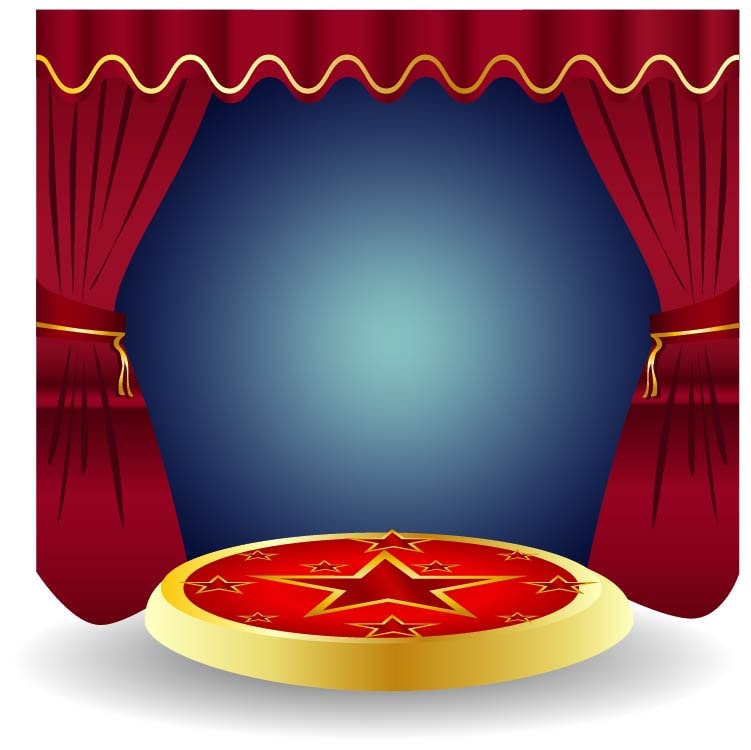
1. General Overview of the Stage Image (Theater circle circus stage with star and red curtain)
-
Central elements include red draped curtains, gold trim, a blue backdrop, and a round, gold-rimmed podium with red stars.
-
Common uses: mass entertainment events, concerts, theater productions, award ceremonies, or promotional designs.
-
Purpose: To convey prestige, celebration, attention, and performance focus.
1 millions Theater movie ticket Design Review
Shutterstock Profile (Cambridge Design Vector)
2. Design Elements
a. Red Draped Curtains (Theater circle circus stage with star and red curtain)
-
Red is historically associated with power, passion, excitement, and importance.
-
Curtains frame the stage, providing a psychological and visual boundary between audience and performance.
-
Draped design: evokes luxury, sophistication, and anticipation.
-
Ancient reference: Red fabrics were often used in Roman theaters and Egyptian ritual stages to signify divinity or importance.
b. Gold Trim (Theater circle circus stage with star and red curtain)
-
Gold conveys wealth, prestige, and significance.
-
In ancient cultures (Egypt, Rome, India), gold symbolized divinity, success, and excellence.
-
In the illustration, gold trim accentuates the curtains and podium, adding a sense of luxury and focus.
c. Blue Backdrop (Theater circle circus stage with star and red curtain)
-
Blue provides contrast to the red curtains, enhancing focus on central elements.
-
Symbolically, blue conveys trust, calm, authority, and stability.
-
Ancient use: Blue was associated with spirituality and the heavens in Mesopotamia, Egypt, and Greece.
d. Round Gold-Rimmed Podium (Theater circle circus stage with star and red curtain)
-
Circular design: symbolizes unity, wholeness, and inclusivity, guiding attention to the center.
-
Gold rim emphasizes importance, prestige, and excellence.
-
Function: Acts as a focal point for performance, awards, or speeches.
-
Historical reference: Elevated platforms and podiums were used in Greek amphitheaters, Roman forums, and religious ceremonies for visibility and authority.
e. Red Stars (Theater circle circus stage with star and red curtain)
-
Stars symbolize achievement, excellence, celebration, and guidance.
-
Red stars add energy, excitement, and emphasis to the podium.
-
Ancient reference: Stars were considered divine symbols in Mesopotamia, Egypt, and classical Greece, often representing guidance, ambition, or heavenly influence.
3. Historical and Ancient Significance
a. Stages in Ancient Civilizations (Theater circle circus stage with star and red curtain)
-
Prehistoric platforms: Elevated areas used by tribal elders, shamans, or storytellers to communicate with the community.
-
Egypt: Temples had stages for reenacting myths; red and gold fabrics were common to signify divine importance.
-
Greece: Amphitheaters with skene (decorated backdrops) formed the basis for modern curtains. Theater combined art, morality, and civic engagement.
-
Rome: Elaborate stages with curtains, trap doors, and skene allowed spectacle, storytelling, and propaganda.
b. Podiums and Elevated Platforms (Theater circle circus stage with star and red curtain)
-
Ancient podiums: Used to highlight orators, leaders, priests, and victors.
-
Symbolic: Authority, focus, and centrality.
-
Examples: Greek rostra, Roman tribunal platforms, and Indian temple altars.
c. Symbolism of Colors (Theater circle circus stage with star and red curtain)
-
Red: Passion, power, action (Rome, Egypt, Medieval Europe).
-
Gold: Prestige, divinity, wealth (Egypt, Rome, India).
-
Blue: Stability, spirituality, trust (Mesopotamia, Greece).
d. Symbolism of Stars (Theater circle circus stage with star and red curtain)
-
Stars as celestial symbols: guidance, ambition, divine favor.
-
Red stars: energy, courage, visibility in celebration or ceremony.
4. Psychological and Cultural Aspects
a. Psychological Impact (Theater circle circus stage with star and red curtain)
-
Curtains: Create suspense and anticipation; reveal signals transition from ordinary to extraordinary.
-
Podium: Centralizes attention, indicating importance and focus.
-
Stars: Evoke aspiration and recognition, making audiences more emotionally invested.
b. Cultural Significance (Theater circle circus stage with star and red curtain)
-
Stages as communal spaces: foster shared experiences, social bonding, and cultural transmission.
-
Ancient performances (religious, civic, or artistic) mirrored the modern role of entertainment, award ceremonies, or concerts.
-
Stage visuals communicate status, prestige, and celebration across centuries.
c. Modern Relevance (Theater circle circus stage with star and red curtain)
-
Used in concerts, corporate events, theater productions, awards, and festivals.
-
Red curtains and gold trim have become universal symbols of theatrical and ceremonial importance.
-
Podium and stars signify achievement, excellence, and celebration in modern culture.
5. Advantages and Positive Aspects
a. Visual Clarity (Theater circle circus stage with star and red curtain)
-
Clear separation of audience and performance.
-
Focus is drawn to central performance area.
b. Emotional Engagement (Theater circle circus stage with star and red curtain)
-
Red and gold evoke excitement and anticipation.
-
Stars and podium symbolize achievement, aspiration, and prestige, enhancing motivation and attention.
c. Historical Continuity (Theater circle circus stage with star and red curtain)
-
Evokes ancient traditions, lending cultural depth and historical resonance.
-
Audience subconsciously perceives ritualistic importance of the performance.
d. Functional Design (Theater circle circus stage with star and red curtain)
-
Curtains hide preparation and scene changes, creating seamless storytelling.
-
Podium elevates speaker or performer, enhancing visibility and audibility.
-
Color contrast improves aesthetic appeal and focus.
e. Cultural and Educational Utility (Theater circle circus stage with star and red curtain)
-
Stage images educate viewers about performance arts, theater history, and ceremonial practices.
-
Can be used in school projects, stock media, or event marketing.
6. Disadvantages and Potential Issues
a. Overemphasis on Status (Theater circle circus stage with star and red curtain)
-
Podium and gold trim may symbolize elitism or hierarchical power, alienating some audiences.
-
Modern audiences may interpret stage grandeur as unrealistic or intimidating.
b. Propaganda Risk (Theater circle circus stage with star and red curtain)
-
Historically, stages and elevated platforms were used for state control, political speeches, and religious authority.
-
Modern use may unintentionally emphasize power imbalances.
c. Cultural Limitations (Theater circle circus stage with star and red curtain)
-
Symbols (red, gold, stars) may carry different meanings across cultures, potentially creating misinterpretation.
d. Resource Intensive (Theater circle circus stage with star and red curtain)
-
Physical stages with curtains, lighting, and podiums require materials, energy, and labor.
-
Environmental impact can be significant in large productions.
e. Psychological Pressure (Theater circle circus stage with star and red curtain)
-
Performers may experience stress, anxiety, or fear of public judgment due to elevated visibility and expectation.
7. Technical and Functional Considerations
a. Visibility (Theater circle circus stage with star and red curtain)
-
Elevated podium ensures performers are seen by the entire audience.
-
Central focus enhances message clarity and storytelling.
b. Acoustics (Theater circle circus stage with star and red curtain)
-
Stage design affects sound projection in theaters, auditoriums, or outdoor events.
-
Red curtains historically helped absorb sound and reduce echo.
c. Scene Transition (Theater circle circus stage with star and red curtain)
-
Curtains facilitate dramatic reveals and scene changes without breaking immersion.
d. Branding and Communication (Theater circle circus stage with star and red curtain)
-
Vector illustrations like this are useful for event promotion, marketing, and digital media.
-
Star patterns and podium imagery immediately convey prestige, achievement, and entertainment.
8. Symbolic Interpretation
a. Red Curtains (Theater circle circus stage with star and red curtain)
-
Barrier between ordinary and extraordinary.
-
Symbol of ritual, anticipation, and grandeur.
b. Gold Trim (Theater circle circus stage with star and red curtain)
-
Luxury, excellence, divinity.
-
Enhances prestige of performance.
c. Podium (Theater circle circus stage with star and red curtain)
-
Center of authority, focus, and attention.
-
Represents achievement, recognition, and excellence.
d. Red Stars (Theater circle circus stage with star and red curtain)
-
Aspiration, celebration, achievement.
-
Connects modern symbolism with ancient cosmic and divine meanings.
e. Blue Backdrop (Theater circle circus stage with star and red curtain)
-
Stability, trust, calm, contrast.
-
Enhances visibility and emotional balance.
9. Applications in Modern Context (Theater circle circus stage with star and red curtain)
-
Theater productions: for drama, musicals, and stage plays.
-
Award ceremonies: podium and stars signify winner recognition and prestige.
-
Concerts: red curtains frame performances for visual impact and theatricality.
-
Corporate events: podium and stage elements convey authority, focus, and professionalism.
-
Digital and print media: vector illustration serves as promotional backdrop, stock art, and design element.
10. Cultural Evolution and Influence (Theater circle circus stage with star and red curtain)
-
Ancient platforms → Greek amphitheaters → Roman forums → Medieval stages → Modern theaters.
-
Stage design reflects changing societal values, artistic trends, and communal practices.
-
Modern stock illustrations like this preserve historical design principles while offering flexible, contemporary use.
11. Conclusion (Theater circle circus stage with star and red curtain)
-
The illustrated stage with red curtains, gold trim, blue backdrop, and star-patterned podium represents a timeless convergence of art, history, symbolism, and functionality.
-
Ancient traditions influence modern design: elevated platforms, color symbolism, and audience engagement have persisted for millennia.
-
Pros: visual clarity, emotional engagement, historical resonance, functional utility, and cultural impact.
-
Cons: potential elitism, cultural misinterpretation, propaganda misuse, resource intensity, and performer stress.
-
Overall, the image serves as a versatile, symbolic, and culturally rich representation of performance, celebration, and achievement, applicable in theater, entertainment, corporate, and educational contexts.



There are no reviews yet.