The Sinister Female Figure in Horror Art: Ancient Roots, Symbolism, Cultural Meaning, and Ethical Dimensions (Woman holding a chainsaw)
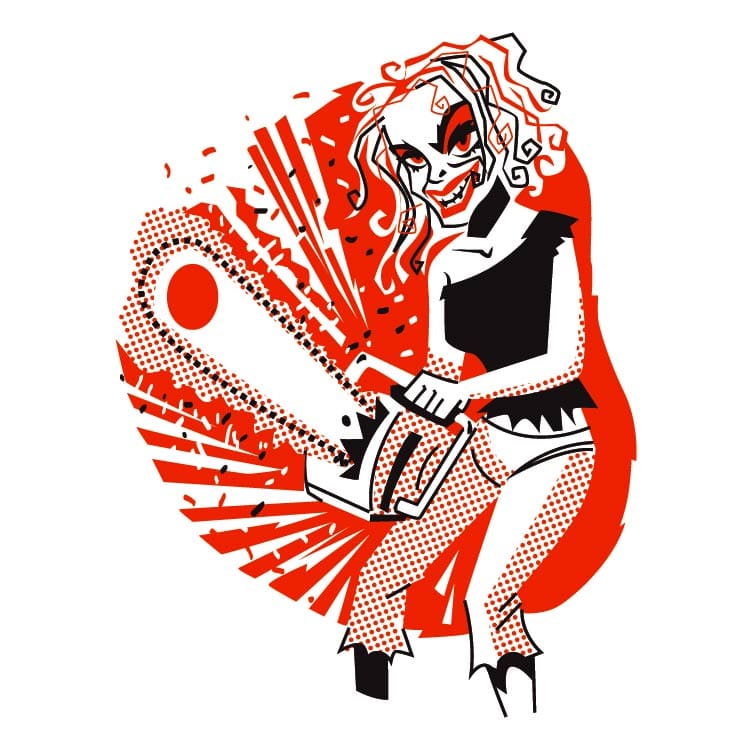
The image depicts a graphic illustration of a sinister-looking woman holding a chainsaw, presented in a stylized horror-art aesthetic. Her unsettling gaze, fixed sneer, and contrasting costume elements—a black top, white bottoms, fishnet stockings, and sharp red-and-black accents—create a powerful visual that evokes fear, tension, rebellion, and psychological unease. While at first glance the image appears modern and rooted in contemporary horror culture, its symbolism and themes trace back to ancient mythology, archetypal psychology, ritual storytelling, and historical representations of fear, chaos, and the shadow self.
This type of imagery belongs to a long tradition of human expression that uses disturbing figures to explore moral boundaries, societal fears, power, identity, and transformation.
1 millions Halloween growl black cat head or black cat smiling face cartoon cute Design Review
Shutterstock Profile (Cambridge Design Vector)
A woman holding a chainsaw, as a visual subject, represents a powerful and complex fusion of fear, symbolism, cultural history, psychology, and artistic expression, making it far more than a simple horror image. Instead, it functions as a layered metaphor that draws simultaneously from ancient archetypes and modern societal anxieties. Such imagery does not exist in isolation but emerges from humanity’s long tradition of using visual symbols to explore danger, power, and transformation.
Throughout human history, tools and weapons have symbolized survival, authority, and dominance. Ancient civilizations frequently depicted gods and warriors wielding axes, sickles, or blades to signify destruction, protection, and renewal. In contemporary imagery, the chainsaw becomes a mechanized descendant of these ancient tools, embodying industrial strength, uncontrollable force, and the intimidating edge of modern technology. Its presence immediately suggests chaos, noise, and raw power amplified by machines.
When this chainsaw is placed in the hands of a woman—especially one portrayed with an unsettling gaze, confident posture, and deliberate defiance—it directly challenges long-standing gender norms. Historically, women have often been framed as passive, nurturing, or vulnerable figures. This image subverts those expectations by presenting the woman as an active agent of power, disruption, and autonomy. Such inversion echoes ancient mythological figures like Kali, Medusa, and Lilith, women who were feared not merely for violence but for independence and refusal to conform, revealing a deep-rooted cultural tension surrounding female authority and rebellion.
From a psychological perspective, the figure operates as an embodiment of Carl Jung’s concept of the “shadow,” representing suppressed emotions such as rage, fear, and the instinct for self-defense—feelings society often discourages individuals, particularly women, from openly acknowledging. Horror imagery like this allows viewers to confront these hidden aspects in a symbolic and controlled environment, offering emotional release and self-reflection rather than an endorsement of real-world harm.
Visually, the chainsaw functions as a focal symbol of chaos and immediacy. Its loud, aggressive reputation heightens tension even in a static image, while the woman’s composed or even smug expression sharply contrasts with the implied danger. This combination creates an uncanny effect by merging calm with threat, a technique long used in ancient ritual masks and modern horror art to provoke psychological discomfort and emotional intensity.
Culturally, such imagery reflects contemporary fears surrounding violence, loss of control, and the erosion of moral boundaries in a technologically driven world where machines amplify human capability beyond natural limits. The woman’s dominance over the chainsaw can also be interpreted as reclaiming control over destructive forces rather than surrendering to them, suggesting mastery instead of mindless aggression.
At the same time, the image invites ethical debate. Repeated exposure to violent symbolism can risk desensitization or misinterpretation when stripped of artistic or cultural context. However, when approached as symbolic art rather than literal instruction, the image serves as a mirror to societal anxieties rather than a glorification of brutality, encouraging reflection rather than imitation.
In popular culture, the woman-with-a-chainsaw motif has become an icon of rebellion and subversion. It appears in films, graphic novels, fashion, and music as a signal of intensity, nonconformity, and resistance to imposed identities. This reinforces the idea that horror aesthetics often function as exaggerated storytelling tools designed to provoke thought and emotion rather than convey literal messages.
Ultimately, the image of a woman holding a chainsaw encapsulates humanity’s timeless fascination with power and fear. By blending ancient mythic symbolism with modern industrial imagery, it explores themes of control, identity, rebellion, and transformation. Rather than celebrating destruction, such representations examine the darker corners of the human experience, where strength, fear, and self-expression intersect in ways that challenge comfort and provoke deeper understanding.
1. ANCIENT ORIGINS OF HORROR IMAGERY (Woman holding a chainsaw)
1.1 Fear as an Ancient Survival Mechanism (Woman holding a chainsaw)
Fear is one of humanity’s oldest emotional responses. Long before written language, early humans used fear-based imagery in cave paintings, rituals, and storytelling to:
-
Warn against danger
-
Teach survival lessons
-
Explain the unknown
Ancient horror imagery was not created for entertainment alone—it served protective, moral, and spiritual functions.
1.2 Ancient Female Figures of Terror and Power (Woman holding a chainsaw)
The image of a dangerous or threatening woman has deep historical roots:
-
Lamia (Greek mythology): A child-devouring female demon
-
Medusa: A woman whose gaze turns people to stone
-
Kali (Hindu tradition): A destructive yet protective goddess
-
Lilith (Mesopotamian and Hebrew lore): A symbol of rebellion and danger
These figures embodied both fear and authority, much like the woman in the image—who holds power through menace rather than beauty or passivity.
2. THE CHAINSAW AS A MODERN SYMBOL (Woman holding a chainsaw)
2.1 Evolution of Tools into Symbols (Woman holding a chainsaw)
In ancient times, weapons such as:
-
Axes
-
Sickles
-
Swords
Were symbols of authority, war, and judgment. The chainsaw, though a modern invention, symbolically replaces ancient tools of destruction and labor.
It represents:
-
Industrial power
-
Loss of control
-
Mechanized violence
-
Dehumanization
2.2 Mythological Parallel (Woman holding a chainsaw)
Just as ancient gods wielded thunderbolts or blades, the chainsaw becomes a contemporary mythic weapon, symbolizing chaos unleashed by technology.
3. THE HORROR AESTHETIC AND VISUAL LANGUAGE (Woman holding a chainsaw)
3.1 Color Symbolism (Woman holding a chainsaw)
-
Red: Blood, danger, passion, rage
-
Black: Death, mystery, rebellion
-
White: Corruption of innocence
These color contrasts were also used in ancient ritual masks and war paint to signal threat and transformation.
3.2 Costume and Identity (Woman holding a chainsaw)
Fishnet stockings and sharp fashion elements suggest:
-
Rebellion against norms
-
Sexual autonomy
-
Social transgression
Historically, societies have often labeled women who defy expectations as dangerous—this image reflects that cultural tension.
4. PSYCHOLOGICAL AND ARCHETYPAL MEANING (Woman holding a chainsaw)
4.1 The Shadow Archetype (Carl Jung) (Woman holding a chainsaw)
This figure represents the Shadow—the repressed, darker side of the human psyche.
Horror art allows society to:
-
Confront suppressed fears
-
Explore taboo emotions
-
Acknowledge inner aggression
4.2 The “Uncanny” (Woman holding a chainsaw)
The woman looks human but feels “wrong,” creating discomfort. This taps into an ancient fear of:
-
Possession
-
Madness
-
Loss of identity
5. ROLE OF WOMEN IN HORROR TRADITIONS (Woman holding a chainsaw)
5.1 Ancient Times (Woman holding a chainsaw)
Women in horror myths were often:
-
Feared for independence
-
Demonized for power
-
Cast as chaos-bringers
5.2 Modern Reinterpretation (Woman holding a chainsaw)
Modern horror art reclaims these figures as:
-
Symbols of resistance
-
Expressions of rage against oppression
-
Subversions of victim narratives
The woman holding a chainsaw is not helpless—she is dominant, challenging traditional power dynamics.
6. GOOD ASPECTS (POSITIVE DIMENSIONS)
6.1 Artistic Expression
Horror art:
-
Explores emotional extremes
-
Pushes creative boundaries
-
Encourages symbolic storytelling
6.2 Psychological Release
Viewing controlled fear:
-
Reduces anxiety
-
Builds emotional resilience
-
Helps process trauma
This mirrors ancient ritual practices where fear was enacted safely.
6.3 Social Commentary
Such imagery often critiques:
-
Violence in society
-
Gender stereotypes
-
Dehumanization through technology
6.4 Empowerment Narratives
Modern horror increasingly portrays women as:
-
Agents, not victims
-
Powerful, not submissive
-
Complex, not one-dimensional
7. BAD ASPECTS (NEGATIVE DIMENSIONS)
7.1 Desensitization Risk
Repeated exposure may:
-
Reduce emotional sensitivity
-
Normalize aggression
-
Blur moral boundaries
7.2 Misinterpretation
Without context, such images may:
-
Glorify violence
-
Reinforce fear-based stereotypes
-
Trigger anxiety in vulnerable viewers
7.3 Cultural Backlash
Some communities view such imagery as:
-
Morally disturbing
-
Spiritually harmful
-
Socially irresponsible
These concerns echo ancient debates about violent myths.
8. HISTORICAL EVOLUTION OF HORROR ICONOGRAPHY
Ancient Era
-
Demons, gods, ritual masks
Medieval Period
-
Witches, devils, moral punishment imagery
Industrial Age
-
Machines as monsters
Modern Era
-
Psychological horror
-
Stylized violence
-
Feminine antiheroes
The chainsaw-wielding woman belongs to this evolving tradition.
9. MEDIA AND POP CULTURE CONNECTIONS
This imagery is common in:
-
Horror films
-
Graphic novels
-
Album artwork
-
Fashion subcultures
It functions as visual shorthand for danger, rebellion, and intensity.
10. ETHICAL AND MORAL INTERPRETATIONS
Ancient View
Fear-based images were tools for:
-
Moral instruction
-
Community protection
Modern View
They raise questions about:
-
Responsibility of artists
-
Audience maturity
-
Cultural impact
11. COMPARISON WITH ANCIENT RITUAL MASKS
Similarities include:
-
Exaggerated expressions
-
Symbolic weapons
-
Identity transformation
Ancient masks allowed wearers to embody spirits; modern horror art achieves a similar effect visually.
12. SOCIETAL REFLECTION
This image reflects:
-
Fear of chaos
-
Anxiety about violence
-
Conflicted views on female power
Horror art acts as a mirror, not a manual.
13. EDUCATIONAL AND ANALYTICAL VALUE
When studied academically, such images help explain:
-
Cultural fears
-
Psychological defense mechanisms
-
Evolution of storytelling
14. CONCLUSION
The graphic illustration of a sinister woman holding a chainsaw is far more than a shocking image. It is the modern descendant of ancient fear symbols, combining mythology, psychology, art, and cultural critique. From ancient demon goddesses to ritual masks to contemporary horror icons, humanity has always used unsettling figures to explore what it fears most—and what it represses.
While such imagery has both positive and negative implications, its enduring presence proves its value as a form of expression. When approached thoughtfully, it offers insight into human nature, societal anxieties, and the timeless struggle between order and chaos.




There are no reviews yet.