The Cross with the Crown of Thorns:
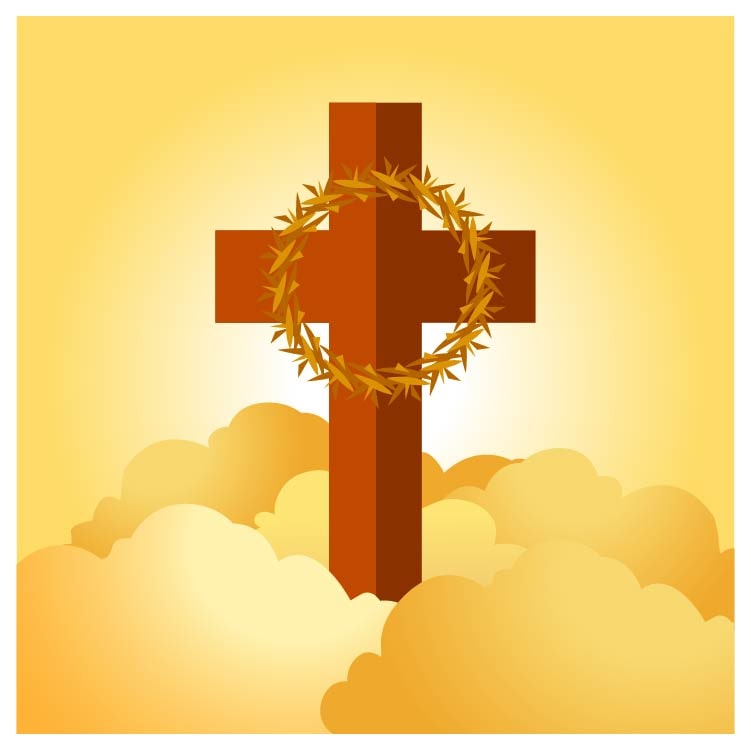
Ancient Origins, Sacred Symbolism, Cultural Meaning, and Its Good and Bad Aspects (Wooden cross and thorns with sunrise clouds)
The image of a cross entwined with a crown of thorns, set against a bright, cloudy sky, is one of the most powerful and emotionally resonant symbols in human history. It represents sacrifice, suffering, redemption, devotion, and hope, and stands at the very heart of Christianity. While the cross with the crown of thorns is most directly associated with the crucifixion of Jesus Christ, its symbolism draws upon ancient traditions, pre-Christian imagery, religious philosophy, and universal human experiences. This image is not merely a religious icon but a profound representation of humanity’s struggle with pain, faith, justice, and meaning.
1 millions Three crosses a hill Design Review
Shutterstock Profile (Cambridge Design Vector)
1. Understanding the Image (Wooden cross and thorns with sunrise clouds)
The image consists of several key visual elements:
-
The Cross: A vertical and horizontal intersecting structure
-
The Crown of Thorns: A ring of sharp thorns resting upon the cross
-
Bright, Cloudy Background: Suggesting heaven, transcendence, and divine presence
Each element carries deep symbolic meaning that extends beyond Christianity into ancient history and universal human symbolism.
2. The Cross as an Ancient Symbol (Before Christianity)
2.1 Pre-Christian Cross Symbols (Wooden cross and thorns with sunrise clouds)
Long before Christianity, cross-like symbols existed across ancient civilizations:
-
Ancient Egypt: The Ankh, a cross with a loop, symbolized eternal life
-
Mesopotamia: Cross shapes represented the four directions and cosmic balance
-
Ancient India: Cross forms appeared in sacred geometric designs
-
Ancient Europe: Solar crosses symbolized the sun, cycles, and life
In these cultures, the cross often represented:
-
Life and fertility
-
Balance between earth and sky
-
The intersection of the divine and the human
3. The Cross in the Roman World
3.1 Crucifixion as Punishment (Wooden cross and thorns with sunrise clouds)
In ancient Rome:
-
The cross was a tool of execution
-
Used for criminals, rebels, and slaves
-
Designed to humiliate and inflict prolonged suffering
The cross symbolized:
-
Shame
-
Power of the empire
-
Human cruelty
This makes Christianity’s transformation of the cross into a symbol of hope historically unique.
4. The Crucifixion of Jesus Christ
According to the New Testament:
-
Jesus was crucified around 1st century CE
-
Accused of claiming kingship
-
Executed by Roman authorities
The cross became sacred because:
-
Jesus accepted suffering willingly
-
His death was believed to redeem humanity from sin
5. The Crown of Thorns: Historical Background
5.1 Biblical Account (Wooden cross and thorns with sunrise clouds)
Before crucifixion:
-
Roman soldiers mocked Jesus
-
Placed a crown of thorns on His head
-
Called Him “King of the Jews”
The act was meant as ridicule but became a symbol of profound meaning.
6. Ancient Meaning of Thorns (Wooden cross and thorns with sunrise clouds)
In ancient cultures, thorns symbolized:
-
Curse and suffering
-
Pain caused by sin or wrongdoing
-
Harshness of the natural world
In the Bible:
-
Thorns appear after the Fall of Man (Genesis)
-
Represent hardship and separation from God
7. Symbolism of the Crown of Thorns (Wooden cross and thorns with sunrise clouds)
The crown of thorns represents:
-
Mocked kingship
-
Human cruelty
-
Willing suffering
-
Spiritual victory through pain
It transforms an object of torture into a symbol of divine humility.
8. The Cross and Crown Together: Combined Meaning (Wooden cross and thorns with sunrise clouds)
Together, the cross and crown of thorns symbolize:
-
Sacrifice without retaliation
-
Love through suffering
-
Redemption through pain
-
Power through humility
This paradox lies at the core of Christian theology.
9. Theological Significance
9.1 Sacrifice (Wooden cross and thorns with sunrise clouds)
Jesus’ suffering is seen as:
-
A voluntary offering
-
A substitute for humanity’s sins
9.2 Redemption (Wooden cross and thorns with sunrise clouds)
Christians believe:
-
Humanity is restored through Christ’s death
-
The cross bridges God and humanity
9.3 Salvation (Wooden cross and thorns with sunrise clouds)
The cross becomes:
-
A doorway to eternal life
-
A sign of hope beyond suffering
10. The Bright, Cloudy Background (Wooden cross and thorns with sunrise clouds)
The background often symbolizes:
-
Heaven
-
God’s presence
-
Resurrection and transcendence
In ancient religious art:
-
Light symbolized truth and divinity
-
Clouds represented divine mystery
11. Artistic Representation Through History
The cross with the crown of thorns appears in:
-
Medieval church art
-
Renaissance paintings
-
Modern Christian design
Artists used this imagery to evoke:
-
Compassion
-
Reverence
-
Reflection
12. Psychological Impact of the Symbol
Emotionally, the image evokes:
-
Empathy
-
Humility
-
Guilt and forgiveness
-
Hope in suffering
Psychologically, it allows believers to:
-
Find meaning in pain
-
Feel accompanied in hardship
13. Cultural Influence of the Symbol
The cross with thorns influences:
-
Architecture (church design)
-
Literature
-
Music (hymns)
-
Moral philosophy
It has shaped Western values like:
-
Compassion
-
Sacrifice
-
Social justice
14. Good Things Associated with the Symbol
14.1 Moral Guidance
Encourages:
-
Forgiveness
-
Humility
-
Love for others
14.2 Comfort in Suffering
Helps people:
-
Endure hardship
-
Find hope in pain
-
Believe suffering is not meaningless
14.3 Social Good
Inspired:
-
Hospitals
-
Charities
-
Humanitarian movements
15. Ethical Influence on Society
Christian teachings associated with the cross promote:
-
Human dignity
-
Care for the poor
-
Non-violence
These values influenced global ethics and law.
16. Bad Things and Controversies
16.1 Misuse of the Symbol
Historically:
-
Used to justify wars
-
Used in forced conversions
-
Used to support oppression
These actions contradict its core message.
16.2 Psychological Guilt
Some critics argue:
-
Excessive focus on suffering causes guilt
-
Can promote passive acceptance of injustice
16.3 Religious Conflict
The cross has been:
-
A source of division
-
A political symbol in conflicts
17. Philosophical Interpretations
Philosophers view the cross as:
-
A symbol of existential suffering
-
A meditation on injustice
-
A representation of sacrificial love
18. Comparison with Other Religious Symbols
| Religion | Symbol | Meaning |
|---|---|---|
| Christianity | Cross | Redemption |
| Hinduism | Om | Cosmic order |
| Buddhism | Wheel | Path to enlightenment |
| Judaism | Star of David | Identity |
Each symbol reflects spiritual values.
19. Modern Use of the Symbol
Today, the cross with thorns appears in:
-
Tattoos
-
Jewelry
-
Churches
-
Memorials
It remains a deeply personal symbol of faith.
20. The Cross as a Universal Metaphor
Beyond religion, it symbolizes:
-
Bearing burdens
-
Enduring injustice
-
Moral courage
21. Educational and Reflective Role
The symbol encourages:
-
Self-examination
-
Ethical living
-
Spiritual discipline
22. Ritual Importance
Used in:
-
Good Friday observances
-
Lent
-
Easter celebrations
It marks key moments in the Christian calendar.
23. The Cross and Human Suffering
The image speaks to:
-
Universal pain
-
Injustice
-
Hope beyond despair
This universality gives it lasting relevance.
24. Ancient to Modern Continuity
From ancient cross symbols to Christian theology:
-
Meaning evolved
-
Symbol transformed
-
Power remained
25. Conclusion
The image of the cross with the crown of thorns stands as one of humanity’s most profound symbols, rooted in ancient imagery and elevated through Christian belief into a message of sacrifice, redemption, and hope. While its history includes misuse and controversy, its core meaning continues to inspire compassion, moral reflection, and spiritual strength. Set against a bright, heavenly background, the symbol reminds believers that suffering is not the end, and that through humility, love, and faith, transformation is possible. Ultimately, the cross with the crown of thorns is not a celebration of pain, but a testament to humanity’s enduring search for meaning, justice, and redemption in a broken world.





There are no reviews yet.